
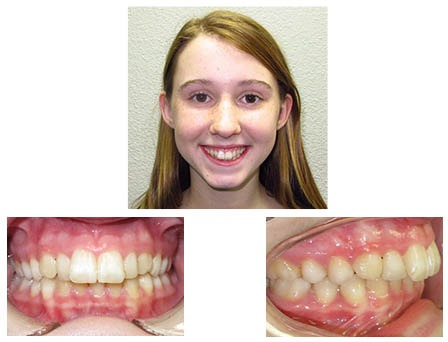
Yes, Invisalign can fix an overbite in many mild to moderate cases. Clear aligners gradually shift your teeth into better position, and when paired with small attachments or elastics, they can also help correct how your upper and lower jaws come together. At Premier Orthodontics, our orthodontists have used Invisalign to help many happy patients close deep bites and feel more confident about their smiles.
What Is an Overbite?
An overbite is when your upper front teeth overlap your lower front teeth vertically. A small amount of overlap is normal and healthy. When that overlap becomes excessive, it’s called a deep bite, and it can cause real problems for your teeth, gums, and jaw.
Here’s a quick way to picture it:
- Normal overlap: about 2-4mm of vertical coverage
- Deep overbite: upper teeth cover most or all of the lower teeth
- Overjet (different issue): upper teeth stick out horizontally in front of the lower teeth
So overbite is vertical. Overjet is horizontal. Easy to mix up, right? Many people confuse the two, and some patients actually have both at the same time.
What causes an overbite? Often it’s a mix of things:
- Genetics and natural jaw shape
- Thumb-sucking or pacifier use during childhood
- Uneven jaw development
- Tongue thrust or mouth breathing
- Missing teeth or early tooth loss
Left untreated, a deep overbite can lead to jaw pain, worn-down front teeth, gum irritation on the lower teeth, headaches, and trouble chewing. The good news? You can fix it, often with Invisalign.
How Invisalign Corrects an Overbite
Invisalign corrects an overbite by using a series of custom clear aligners that gradually move your teeth into a healthier position. Each set is worn for about one to two weeks, then swapped for the next set in the series. Small tooth-colored attachments and elastics may be added to help guide your bite into proper alignment.
Here’s how the process typically works at Premier Orthodontics, where your care is overseen by an experienced orthodontist:
- 3D scan and planning. Your orthodontist takes a 3D scan of your teeth and maps out every movement from start to finish.
- Custom aligners delivered. Your trays are fabricated and shipped to our office, ready for your first fitting.
- Tooth-colored attachments (when needed). These tiny bumps bond to certain teeth and give the aligners something to grip, which is especially helpful for closing a deep bite.
- Elastics for bite correction. For some overbites, small rubber bands hook to your aligners to help shift the lower jaw forward or guide the bite.
- Periodic check-ins. You’ll visit our office every 6-10 weeks so your orthodontist can track progress.
Most overbite cases finish in 12-24 months, though mild cases can wrap up faster. Severe skeletal overbites, where the jaw itself is significantly out of alignment, may need metal braces or a combined approach. Your orthodontist will tell you upfront which option fits your situation best, and exactly why that recommendation makes sense for your teeth and bite.
What Are the Benefits of Treating an Overbite With Invisalign?
Why do so many adults and teens choose Invisalign for overbite correction? A few reasons stand out, and they go beyond just looks.
How does Invisalign make daily life easier?
Comfort and convenience are big draws. Here’s what patients tell us they love most:
- Nearly invisible. Most people won’t notice you’re in treatment.
- Removable. Take them out to eat, brush, and floss like normal.
- Fewer office visits. That means fewer days of missed work or school.
- More comfortable. No metal brackets or wires poking your cheeks.
You also get a smile you actually want to show off, which gives many patients a real boost in everyday confidence.
What are the long-term health benefits?
Fixing your bite isn’t only cosmetic. Correcting an overbite reduces tooth wear, eases jaw strain, and protects your gums from the kind of irritation a deep bite can cause over the years. Healthier teeth and a more comfortable jaw tend to pay off well into the future, long after treatment ends.
Invisalign vs. Braces for Overbite Correction
Both Invisalign and metal braces can correct an overbite, but each has strengths. Braces tend to handle severe and complex cases more reliably because the brackets are bonded directly to the teeth. Invisalign works well for mild to moderate overbites, especially for patients who want a discreet, comfortable option.
Here’s a side-by-side look:
| Feature | Invisalign | Metal Braces |
|---|---|---|
| Best for | Mild to moderate overbites | Mild to severe overbites |
| Visibility | Nearly invisible | Visible brackets and wires |
| Treatment time | 12-24 months (varies) | 18-30 months (varies) |
| Comfort | Smooth plastic, no poking | Brackets can irritate cheeks |
| Eating | Remove to eat anything | Food restrictions apply |
| Cleaning | Remove to brush and floss | Brush carefully around brackets |
| Office visits | Every 6-10 weeks | Every 4-6 weeks |
| Elastics for bite | Yes, when needed | Yes, when needed |
The right choice really comes down to two things, how severe your overbite is, and what fits your lifestyle. At your free consultation, your orthodontist will walk you through both options and recommend what works best for your case.
Are You a Candidate for Invisalign Overbite Treatment?
You may be a good candidate for Invisalign overbite treatment if you have a mild to moderate overbite, healthy teeth and gums, and the discipline to wear your aligners 20-22 hours per day. Both adults and teens with enough jaw development can qualify, though severe skeletal overbites may need a different approach. A quick exam with an experienced orthodontist is the best way to find out where you stand.
Here’s a quick checklist of what makes someone a strong candidate:
- Mild to moderate overbite (deep bite, but not severe)
- Healthy teeth, gums, and supporting bone
- Fully developed adult teeth (or close to it for teens)
- Willingness to wear aligners 20-22 hours daily
- Commitment to keeping aligners clean and showing up for check-ins
If your overbite is caused by significant jaw misalignment rather than tooth position, your orthodontist may recommend braces, jaw surgery in rare cases, or a combination approach. The only real way to know for sure is a free exam, digital X-ray, and comprehensive evaluation with an experienced orthodontist who can map out the safest path for your smile.
Frequently Asked Questions
Can Invisalign fix an overbite without rubber bands?
Sometimes, yes. Mild overbites caused mostly by tooth position can often be corrected with aligners alone. Deeper overbites or those involving the jaw usually need elastics to help guide the bite into place. Your orthodontist will let you know during your free consultation whether rubber bands are part of your plan.
Can Invisalign fix an overbite in adults?
Absolutely. Adults of all ages get Invisalign for overbite correction every day. As long as your teeth, gums, and bone are healthy, age isn’t a barrier. We’ve helped patients from their 20s well into their 70s straighten their smiles and fix their bites.
How long does Invisalign take to fix an overbite?
Most Invisalign overbite cases take 12-24 months. Mild cases can finish faster, while more complex bites take longer. Wearing your aligners 20-22 hours per day, every day, is the single biggest thing you can do to stay on schedule.
Can Invisalign fix overjet too?
Yes. Overjet (when upper teeth stick out horizontally) can also be corrected with Invisalign, often using attachments and elastics to pull the teeth and jaw into better alignment. Many patients have both overbite and overjet, and Invisalign can address them together.
Will my overbite come back after Invisalign?
It can if you skip your retainer. Teeth naturally want to shift over time, which is why retainers are essential after any orthodontic treatment. Wear your retainer as directed, and your results will last for years.
Is Invisalign or metal braces better for overbite?
It depends on the severity. Metal braces are usually better for severe overbites or complex jaw issues. Invisalign is excellent for mild to moderate overbites, especially when you want a discreet, comfortable option. Both work well when designed by an experienced orthodontist who plans every step of your treatment with care and precision.
Talk to an Arizona Invisalign Provider
Premier Orthodontics treats overbites with Invisalign and braces across the Phoenix metro, with offices in Phoenix, Chandler, Glendale, Casa Grande and Maricopa. Want to know if Invisalign can fix your overbite? Schedule your free consultation and we will map out your options.