
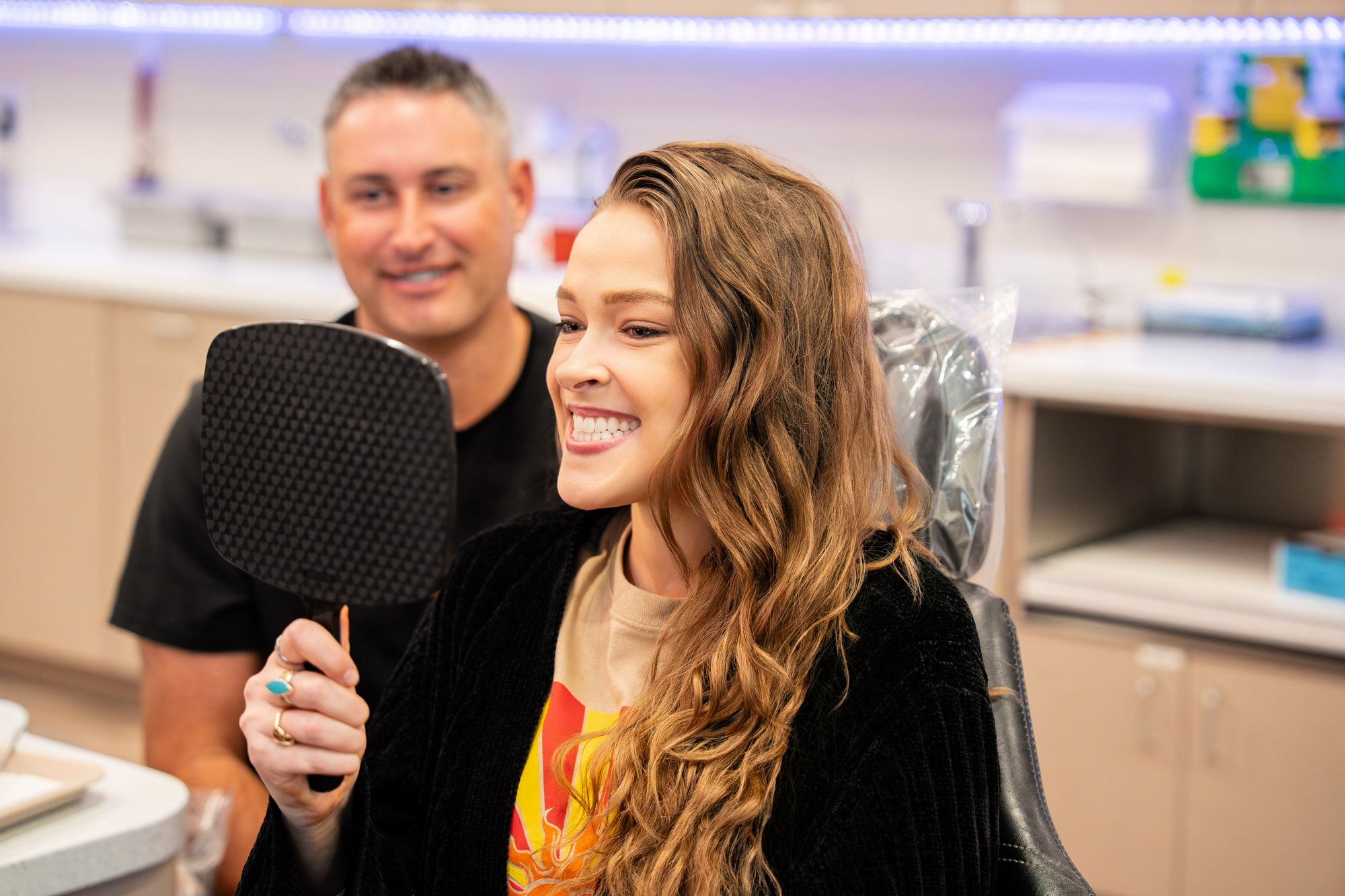
Thinking about straightening your smile later in life? You’re not alone. Plenty of adults start orthodontic treatment, and braces for adults look nothing like what you might remember from middle school. Whether you’re dealing with crowding, a shifting bite or results that have drifted since your teenage years, this guide walks you through what to know before you start.
What Are Adult Braces?
Adult braces are orthodontic appliances, including brackets, wires and clear aligners, used to straighten teeth and correct bite problems in patients 18 and older. They address crooked teeth, crowding, overbite, underbite, spacing and jaw alignment issues using the same biology that moves teeth at any age.
Adult cases do work a little differently than kids’ cases. Because the jawbones have stopped growing, orthodontists plan treatment around a fully developed skeleton. That often means focusing on tooth movement and bite correction, and sometimes coordinating with your general dentist on fillings, crowns or other dental work. Today’s braces also use smaller brackets, tooth-colored materials and lighter forces, which makes the day-to-day experience easier to live with than older systems.
How the Adult Braces Process Works, Step by Step
Starting treatment as an adult is simpler than most people expect. Here’s what happens from your first visit to the day your braces come off.
- Consultation and treatment planning. Your first visit is a consultation where the doctor looks at your teeth, bite and jaw, talks through your goals and recommends a plan.
- Getting your teeth ready. Before brackets go on, your teeth need to be healthy. That usually means a dental cleaning, filling any cavities and sometimes placing spacers or scheduling extractions if there’s significant crowding. If you have gum disease, that gets treated first.
- Placing your braces. Brackets are bonded one by one to the front of each tooth, and the first archwire is threaded through to start guiding tooth movement.
- Regular adjustments. You’ll come in on a regular schedule so the doctor can change wires, adjust elastics and track progress. These visits are where the real work of shifting your teeth happens.
- Removal and retainers. When your teeth reach their final positions, the brackets come off, your teeth get polished and you’re fitted for a custom retainer. Wearing it as directed is what keeps your new smile in place.
Benefits of Getting Braces as an Adult
The reasons adults choose treatment go well beyond looks.
How Do Braces Improve Oral Health for Adults?
Straight teeth are easier to brush and floss, which lowers your risk of cavities and gum disease. When teeth overlap or crowd, plaque hides in places a toothbrush can’t reach, and over time that leads to decay and inflammation around the gumline. Aligning your bite can also reduce jaw strain and prevent the uneven wear that can crack or chip teeth. Correcting an overbite, underbite or crossbite spreads chewing forces more evenly across your mouth, which helps protect your enamel and existing dental work.
Why Do So Many Adults Choose Treatment Later in Life?
Confidence is a big part of it. Whether you’re leading meetings, meeting new people or just tired of hiding your smile in photos, a straight smile changes how you feel. Many adults had braces as teens but stopped wearing their retainers, and their teeth shifted back over time. Treatment can correct that drift and stabilize the bite. Others never had the chance to get orthodontic care growing up and are ready to do it for themselves. Discreet options like clear braces and Invisalign let you straighten your smile without it being the first thing people notice at work.
Orthodontists routinely treat adults in their 30s, 40s, 50s and beyond. If you’ve been putting it off, age isn’t a reason to keep waiting.
Types of Braces for Adults
There’s no single best option. The right choice depends on your bite and your lifestyle. Here’s a side-by-side look at the most common options for adults.
| Type | Visibility | Often a Good Fit For |
|---|---|---|
| Metal braces | Most visible | Complex bite corrections |
| Clear braces | Blend with teeth | Adults who want braces that are less noticeable |
| Invisalign clear aligners | Nearly invisible | Mild to moderate cases and adults who don’t want anything bonded to their teeth |
Metal braces are the workhorse of orthodontics and the best fit for complex bite corrections.
Clear braces use tooth-colored brackets that blend in. They work the same way as metal braces but are much less noticeable in person or in photos.
Invisalign uses a series of removable clear aligners that gradually shift teeth. It’s a great fit for mild to moderate cases and for adults who don’t want anything bonded to their teeth.
Am I a Good Candidate for Adult Braces?
Most healthy adults are. Here’s what makes someone a strong candidate.
- Healthy teeth and gums. You need enough bone support and gum tissue for teeth to move safely. Active gum disease has to be treated first.
- No untreated decay. Cavities and failing fillings or crowns are handled before brackets go on.
- A plan for existing dental work. Crowns, implants, veneers and bridges can all work alongside braces, but each case needs a tailored plan. Implants, for example, don’t move the way natural teeth do, so an orthodontist will design treatment around them.
- Commitment to the process. Adult treatment works best when you keep your appointments and follow instructions on hygiene, elastics or aligner wear.
- Any age. There’s no upper age limit. Healthy bone and gums matter far more than your age.
The only way to know for sure is an exam with an orthodontist. That’s exactly what the first visit is for.
Living With Braces as an Adult
Most adults are surprised by how quickly braces fit into a normal routine. Talking may feel a little different for the first few days while your lips and tongue get used to the brackets, but it settles fast. You’ll want to skip hard and sticky foods like hard candy, popcorn kernels and caramel, and cut tougher foods into smaller bites. Cleaning takes a few extra minutes each day, and our guide on how to floss with braces walks you through it.
Frequently Asked Questions About Adult Braces
What should I know before wearing braces?
Expect a short adjustment period during the first week or two. Your mouth needs to get used to the brackets, you’ll need to avoid certain foods like hard candy, popcorn kernels and anything sticky, and your cleaning routine will need to be more thorough. After the first couple of weeks, braces start to feel normal.
Is day 2 the worst for braces?
Yes, for most people. Soreness typically peaks about 24 to 72 hours after your braces go on or after an adjustment. Over-the-counter pain relievers, soft foods and warm salt-water rinses all help, and the discomfort usually fades within 3 to 5 days.
How long do adults wear braces?
It depends on how much your teeth need to move and how complex your bite is. Simple cases finish faster and bigger bite corrections take longer. Your orthodontist will give you a timeline at your consultation based on your exam.
Can adults get Invisalign instead of braces?
Yes. Invisalign works well for many adults, especially for mild to moderate crowding, spacing and bite issues. Some more complex cases still do better with braces, and your orthodontist will tell you which fits your teeth.
Am I too old for braces?
No. Teeth can be moved at any age as long as the surrounding bone and gums are healthy. Age itself isn’t the limiting factor. The health of your teeth and gums is.
Do adults need to wear retainers after braces?
Yes. Teeth naturally want to drift back toward their old positions, and that’s true at any age. Wearing your retainer as directed is what keeps your results in place.
Start With a Free Consultation
If you’ve been wondering whether braces make sense for you, the easiest next step is a free consultation at one of our Phoenix-area offices. The doctor will look at your teeth and bite, answer your questions and walk you through the options for orthodontic care for adults.